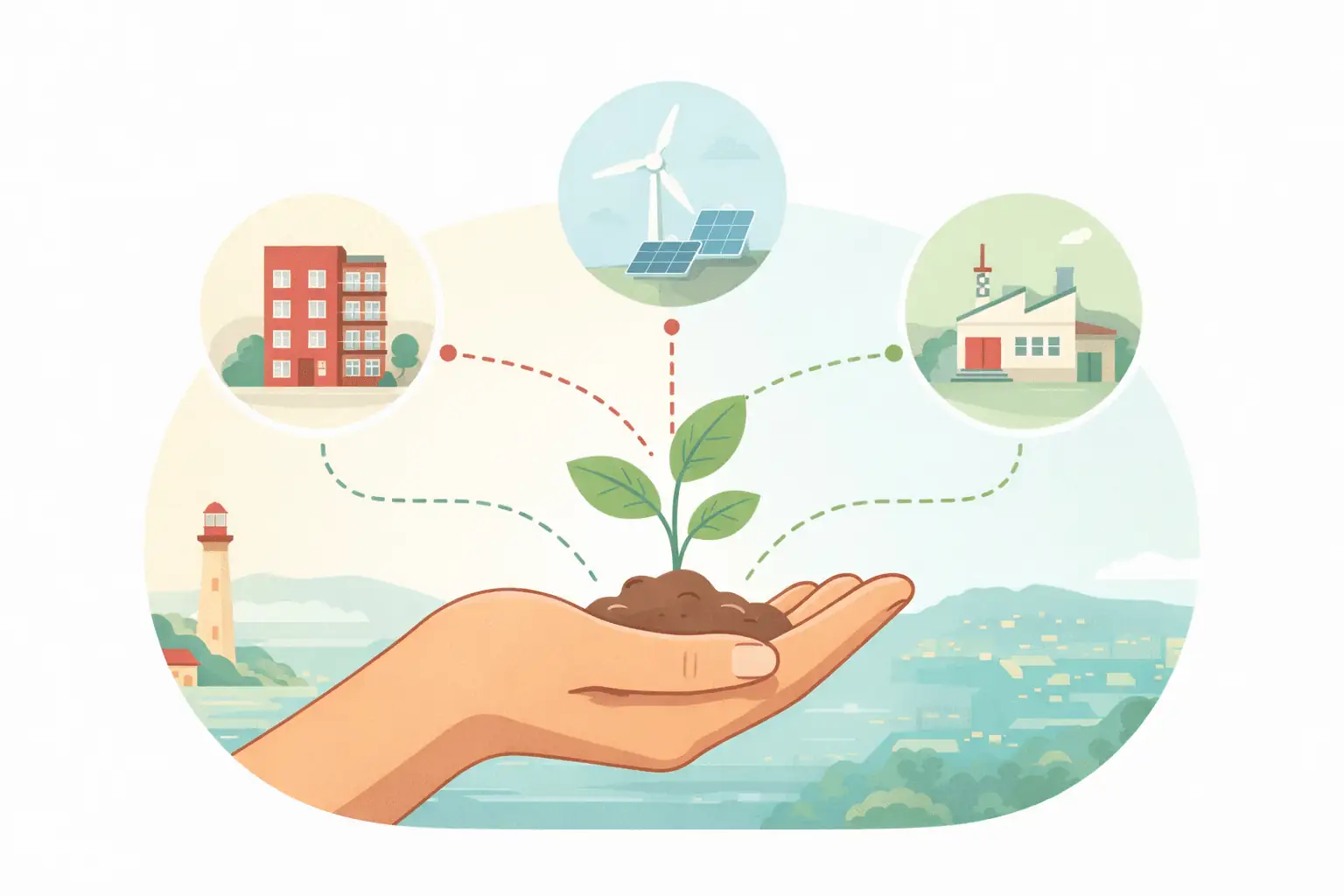
Crowdlending has established itself in a few years as a direct bridge between individual savings and companies’ financing needs. The idea is simple on paper, but powerful in real life. Instead of letting your money sit in a low-yield account, you put it to work by lending to identified companies, on concrete projects, with a repayment schedule and interest.
What attracts people is not only the promise of a return higher than some traditional investments. It’s also the fact of understanding where the money goes. In my former daily life as a logistics worker, the value of a flow was tangible. Here, we find that concrete side with real estate projects, renewable energy installations, or the cash needs of an SME that wants to scale. But this realism has a flip side. Crowdlending is not a guaranteed savings account. You must accept the possibility of delays, even defaults, and build a method to invest without putting yourself in danger. The rest of this text is for that purpose.
Clear and precise definition of crowdlending: understanding this alternative investment mode
What is crowdlending and how does it work?
Crowdlending is a form of crowdfunding based on lending. Concretely, individuals lend money to a company via an online platform, and receive interest in exchange. It is sometimes called a participatory loan, because the financing effort is spread among many lenders, each contributing an amount suited to their budget.
The mechanism is similar to a conventional loan, but without a bank in the middle. The company publishes a need, for example to finance stock, a machine, or a construction in real estate. Investors select the projects, provide the funds, and then the borrower repays according to a schedule. The logic to keep in mind is simple. You exchange liquidity today for future repayments, with a return known from the start, provided everything goes well.
This framework puts the power of choice in the hands of the individual. That’s precisely what makes crowdlending interesting, but demanding, because choosing also means assuming part of the risk.
Key players in crowdlending: investors, borrowers and digital platforms
In crowdlending, there are three blocks. First the investor, often an individual looking for a more dynamic but understandable investment. Next the borrower, a company seeking quick or complementary financing. Finally the platform, which acts as the technical intermediary and the filter.
To make it concrete, imagine Lina, manager of a small carpentry company. She has a large contract but must advance the purchase of materials. The bank drags its feet, or asks for too many guarantees. Lina goes through crowdlending. On the other side, individuals finance her need, and she repays as soon as her client invoices are paid. It’s not magic. It’s another organization of credit: more direct, faster, and often more transparent.
The key is the quality of intermediation. A good platform does more than list projects. It structures information and frames the financing. That’s what makes the difference between a useful tool and a risky showcase.
The different forms of crowdlending according to borrower types and loans
Financing credit companies, real estate projects and renewable energy through crowdlending
Crowdlending is not only used to finance “the local small business.” You also find credit companies that borrow to refinance existing loans, real estate operations such as developments or renovations, and renewable energy installations like rooftop photovoltaic plants.
Each category has its own rules. In real estate, terms are often short to medium, and projects are tied to a construction and sale schedule. In renewable energy, the logic can be more industrial, with revenues linked to power purchase agreements. For credit companies, you approach a financial mechanic where the lender must be even more attentive to ratios, margin model, and portfolio solidity.
This choice of sectors helps avoid putting all your eggs in one basket. You don’t look for the “best” crowdlending. You seek a coherent set of projects whose economic drivers differ. It’s an investment reflex that increases resilience.
Crowdlending for micro and small businesses (TPE and PME): supporting small companies
Crowdlending applied to TPE and PME often resembles growth financing. A company may want to hire, buy a machine, open a sales point, or absorb a peak in activity. These projects are easy to understand because the use of funds and the economic utility are clear.
The strength is the impact. When an SME is financed, it secures orders, pays salaries, and works with suppliers. It’s an investment that touches the real economy, not an abstract product. The weak point is potential fragility. A small company can be solid but more exposed to a major client who pays late, rising expenses, or a drop in demand.
For this category, method matters. It’s better to finance several modest-amount projects than to bet large on a single company. It’s common sense applied to crowdlending.
Loan modalities in crowdlending: amortizing loan vs bullet loan (in fine)
In crowdlending, the repayment method changes the investment profile. With an amortizing loan, the borrower repays part of the principal and interest each month or quarter. For the investor, this means you gradually get your money back, which reduces exposure over time.
With a bullet (in fine) loan, the company pays interest during the loan term, then repays the principal in one lump sum at maturity. This is common for some real estate projects, where the capital repayment is scheduled after a sale. The advertised return may look similar, but the timing of the principal is entirely different. As long as the principal hasn’t been repaid, it remains fully exposed to any incident.
Before clicking, I always check the coherence between the activity and the modality. A bullet loan can be logical, but only if the exit scenario is credible. That’s where crowdlending becomes a field reading, not just a button.
The crucial role of digital platforms in secure and transparent crowdlending
Selection and evaluation of projects: how platforms ensure quality
The value of a crowdlending platform is first measured by its selection. It analyzes financial statements, the business model, history, and repayment capacity. Some rate files, others impose profitability thresholds, or require guarantees. The goal is not to eliminate risk, but to filter out fragile files.
In practice, I look for simple indicators. Clear information, documented projects, realistic assumptions. If the file looks like a marketing brochure, I skip it. If I see a precise use-of-funds plan, an explanation of margins, and a reading of weak points, I feel better equipped.

Good selection is not enough. There must also be a consistent range. A serious platform does not offer anything and everything. It commits to specific sectors, durations, and a control policy. This framework is what makes crowdlending workable for an individual.
Management of financial flows and investor protection
Crowdlending is 100% online, so the payment mechanism is central. Contributions, repayments, delays—everything must be tracked. Many platforms rely on authorized payment providers and escrow accounts to separate investors’ funds from the operator’s funds.
Protection also comes through information. A solid platform displays delay rates, default rates, and how it manages collections. It’s less “sexy” than promises of returns, but it’s what truly protects. Crowdlending becomes serious when you look at statistics, not only opportunities.
Verified element | Why it matters in crowdlending | What I look for |
|---|---|---|
Transparency on defaults | Measure the actual level of risk | Published rates, methodology, history |
Collection process | Limit losses if a borrower derails | Clear steps, partners, timelines |
Separation of funds | Avoid confusion between client money and operator | Payment provider, escrow |
The advantages of crowdlending: diversification, attractive returns and positive economic impact
How crowdlending supports concrete and innovative projects
Crowdlending has a “ground” side. You finance identifiable projects with visible utility. An SME that automates a production line, a developer renovating an old building, a company installing renewable energy panels. These are simple stories to follow, and it changes how you experience your investment.
You can also target innovation. Some projects touch on energy optimization, recycling, or more resilient agricultural models. This is not a donation. It remains an interest-bearing loan. But the savings serves a concrete use, which gives meaning and a more human framework for evaluation.
When money has a clear destination, you make better decisions. It’s one of the most underestimated benefits of crowdlending.
Returns higher than classic investments and portfolio diversification
Many come to crowdlending for the return. It can be higher than guaranteed products because you lend to companies, with a higher level of uncertainty. That premium is the compensation for risk. The rule to remember is clear. If it’s better paid, it’s not free.
Another interest is diversification. Adding crowdlending to a portfolio can complement emergency savings, life insurance, or equities. It’s not about replacing, but balancing. In practice, I prefer to spread across different terms and sectors, for example some real estate, some SMEs, some renewable energy.
To keep a simple discipline, here is a baseline I often see work for a beginner in investment in this asset class:
Break the total sum into small lines to finance several projects in crowdlending.
Avoid concentrating everything on a single sector, even if real estate seems reassuring.
Limit long durations until you have experience and hindsight.
Crowdlending is interesting when it remains a tool serving a plan, not a race to the highest-paying offer. That’s where diversification becomes real protection.
Crowdlending strategy simulator
Estimate the impact of diversification, defaults and the repayment type (amortizing vs bullet) on your potential return.
Note: this simulator provides an educational estimate (not investment advice).
Your parameters
All values are editable and expressed in euros, months and percentages.
Reminder (diversification)
Diversifying reduces the impact of an isolated default: spreading capital across more projects can smooth risk.
Estimated results
Based on a simple estimate from your parameters.
| Month | Interest | Principal | Total received | Remaining principal |
|---|---|---|---|---|
| Enter your parameters to display the schedule. | ||||
Quick guide
- Gross interest: estimate based on annual rate and duration.
- Losses: default × (1 − recovery).
- Net return: gross interest − losses (excluding taxes and fees).
The risks of crowdlending: understanding the limits and precautions to take
Borrower default risk and capital loss
The main difficulty of crowdlending is default. A company can suffer a cash accident, lose a key client, or face rising costs. In that case, interest stops and capital may be affected. You must accept that loss exists, even if it is not frequent across all profiles.
On real estate projects, a construction can be delayed, a sale postponed, or a budget overrun. For an SME, a bad season can sometimes be enough to weaken repayment capacity. Crowdlending is not a guaranteed product, it is a credit investment. You lend, so you can lose.
The best defense remains method. Small lines, readable files, and no self-hypnosis about the return. You win over the long term, not on a single bet.
Low liquidity of receivables and regulatory constraints for investors and companies
Another limit of crowdlending is liquidity. Once money is lent, it is generally locked until maturity. Some offers provide secondary markets, but these are not always available or guaranteed. You should therefore invest only sums you do not need for everyday expenses.
There are also constraints. Amounts raised by companies can be capped depending on the operation structure and applicable framework. For individuals, certain rules limit exposure per transaction depending on investor status and offer type. These safeguards prevent excesses but require planning your financing and your ticket sizes. Crowdlending works better when treated as a dedicated pocket with clear personal rules.
How to choose your investment in crowdlending: key criteria to invest with confidence
Analyze your investor profile, project type and loan duration
Even before looking at projects, I always come back to profile. What horizon, what liquidity need, what tolerance for seeing a line late. An investment in crowdlending only makes sense if the money is not intended for an emergency, and if the overall plan holds even in case of an incident.
Next, the type of projects must fit the scenario. For a beginner, short durations and understandable activities are often more comfortable. In real estate, I look at safety margin and schedule. For SMEs, I seek regular activity. For renewable energy, I check revenue stability and project progress.
Finally, duration must be chosen, not suffered. The longer it is, the more hazards accumulate. Crowdlending becomes serene when duration is coherent with the borrower’s real life.
Check guarantees, document quality and platform reliability
Verification is not reserved for professionals. In crowdlending, I want clean documents and a simple logic. On the sponsor side, you often find identity elements, income or situational evidence for the managers, and information on guarantees. On the file side, I look for a business plan, a market study if it’s an opening, legal status, and elements of tax and social regime. All that helps judge coherence.
Guarantees do not solve everything, but they influence the balance of power if things go wrong. Guarantee, pledge, mortgage in real estate, insurance depending on cases. The important thing is to understand what is really available and in what timelines. Crowdlending requires a clear-eyed view, not a quick skim like on social networks.
Finally, I return to the platform. History, clarity of fees, quality of monitoring, publication of default data. Known players exist on the French and European market, but that doesn’t exempt you from checking current conditions. On this point, crowdlending rewards rigor more than enthusiasm.
Project type | What I check first | Warning sign |
|---|---|---|
Real estate | Permits, presales, margin, schedule | Unclear exit or dependence on a single sale |
SME | Recurring clients, cash flow, track record | One client represents most of the revenue |
Renewable energy | Contracts, commissioning, maintenance | Hypothetical revenues or project too early |
Niche like wine | Stock, turnover, insurance, outlets | “Story” valuation without solid numbers |
Regulatory context and taxation of crowdlending in France: what you need to know
Obligations of digital platforms and investor protection
In France, crowdlending is regulated. Operators must comply with rules on transparency, risk information, and conflict-of-interest management. Publication of indicators such as delay and default rates, as well as clear disclosure of commissions, is also expected. It’s a practical point. If the platform does not show its figures, I consider that I lack the tools to decide.
This framework aims to make crowdfunding healthier. It does not guarantee performance, but it imposes a minimal standard of seriousness. The idea is simple. Better information prevents individuals from confusing a credit investment with a guaranteed savings product.
Taxation of interest received: flat tax and fiscal options
Interest from crowdlending is taxable. Taxation often goes through the flat tax (prélèvement forfaitaire unique), with the option to choose the progressive scale depending on your situation. In practice, you should keep a clear record of interest received and check the documents provided each year to avoid surprises.
This point is less exciting than return, but it changes the final net. An attractive crowdlending on paper can lose appeal if you forget taxes and defaults. The right calculation is always after fees, after tax, and after incidents.
Concrete examples of attractive sectors: real estate, renewable energy
In sectors often considered attractive, real estate comes up frequently because projects are easy to visualize. A building rehabilitation, a development operation, a buy-to-sell. Crowdlending often serves as short-term financing alongside a bank loan. It’s readable but sensitive to cycles and sale delays. Even in real estate, you are not immune.
Renewable energy also attracts, as it meets a structural need. A solar park or a methanization unit has technical constraints but can rely on contracts and relatively predictable revenues. There too, crowdlending financing speeds up installations, giving a concrete impact on the energy transition.

If I had to keep one actionable rule, it would be this. In crowdlending, you don’t aim to be right about a single file. You aim to build a system where several projects can succeed without jeopardizing the rest of your financial life.
What minimum amount should be planned to start crowdlending?
It’s best to start small, with an amount you can lock. The goal is to spread across several projects from the start, even with small tickets, to limit the impact of a default on your investment.
Is crowdlending suitable for emergency savings?
No, because capital is not guaranteed and funds are often blocked until maturity. Crowdlending is rather positioned after an already-built emergency fund, as an additional investment pocket.
How to quickly evaluate a real estate project in crowdlending?
Check the schedule, the safety margin, the exit strategy, and concrete elements such as permits, presales, or level of progress. In real estate, delays happen, so schedule coherence matters as much as return.
Why is liquidity a weakness of crowdlending?
Because you lend money for a defined period. Until the loan matures, you cannot freely recover your capital, except in rare cases of resale on a secondary market. You therefore need to match financing duration to your horizon.
Should you use one platform or several?
Using multiple platforms can help diversify access to projects and selection methods. The important thing is to choose transparent players who publish their indicators and clearly explain fees, delays and collections.
Leave a Reply