
Cryptocurrencies are talked about because they touch two very concrete things. Everyday money and the way we place trust in a system. For a long time, we entrusted that trust to banks, states and traditional payment networks. Today, another logic has emerged, carried by the Internet and by a word you see everywhere, blockchain. Behind the noise, there is mainly a simple idea. You can record transactions in a shared ledger, without a central counter, and make that ledger very hard to tamper with.
In practice, it changes habits. One person can send value to another in a few minutes, sometimes to the other side of the world, without going through the same chain of intermediaries. But this gain in freedom comes with responsibilities. Security no longer relies solely on a bank password and customer service. It also depends on a private key, on reflexes, and on a minimal understanding of the rules of the game. When you manage a budget and think about your family, an expatriation or retirement, you want something solid. The goal here is to make the basics clear, without unnecessary jargon, and to give a step-by-step method to move forward.
Clear definition of cryptocurrencies: what are crypto?
A cryptocurrency is a digital or virtual currency that uses cryptography to secure exchanges. It does not exist in the form of banknotes or coins. It circulates only on computer networks, as digital entries. The central idea is simple. Instead of asking a bank to validate the transactions, the network validates them collectively, according to rules known in advance.
This point changes everything. In the banking system, a central authority keeps the ledger and can, in theory, block, cancel, or delay transactions. In the crypto world, this ledger is shared. We talk about blockchain, a public accounting ledger, where movements are visible, verifiable, and designed to be immutable. It is not a magical promise. It is a technical mechanism that makes cheating very costly.
To understand without getting lost, I use a logistics analogy. Imagine a warehouse where every stock movement is written on boards that everyone can see. If someone tries to modify an outgoing shipment, they must also deceive all the identical boards at the same time, without being noticed. That is the spirit of the blockchain. You can dispute a story, but not easily rewrite the evidence.
Finally, watch the vocabulary. People often say “crypto” to talk about everything and anything. In reality, a cryptocurrency can be used to pay, to access a service, or to participate in a network. Some are designed as a store of value, others as an infrastructure. This diversity explains why the crypto market looks more like an ecosystem than a single currency. The practical rule is simple. Understand the use first, look at the price afterwards.
Crypto is not only for speculation. It also allows buying fractional real estate, as I explain in my experience report on RealT
Technical functioning of cryptocurrencies and the role of the blockchain
The technical functioning may seem intimidating, but it can be summed up in three repeated steps. A person initiates an operation. The network verifies that the request is valid. Then this request becomes a permanent trace in the blockchain. What makes the difference is that trust is produced by the protocol and the collective, not by a single actor. And the more the network is used, the more the question of transactions becomes central, because everything must remain coherent despite the volume.
To make this alive, let’s follow a thread. Imagine Leïla, a freelancer paid by clients in Canada and Europe. She wants to avoid bank delays and exchange fees. She tests a cryptocurrency. When she receives a payment, she sees the operation appear, then be confirmed. What she observes on the surface is simple. Behind the scenes, the blockchain organizes the queue, the sorting, the validation, and the archiving of transactions.
Blockchain: decentralized and secure ledger of transactions
A blockchain is a chain of blocks. Each block contains a batch of validated transactions, plus technical information that links it to the previous block. This link is the reason we speak of a chain. If you modify a detail in a block, you break coherence with the following blocks. The network notices and rejects the tampering. It is a form of security by structure.
This ledger is decentralized. That means it is copied and shared across a large number of computers, often called nodes. Each node keeps a version of the blockchain and participates, according to the network rules, in the verification of transactions. There is no single “master server” to attack to rewrite history. It is the opposite of an Excel file stored on a single computer.
Transparency is another strong point. On many networks, you can follow transactions in real time, even if real identities are not displayed. You see addresses, amounts, times, confirmations. This transparency helps verify, audit, and sometimes investigate. It also has its limits, because privacy is handled differently than in a bank. The idea to remember is simple. The blockchain offers strong traceability, but it requires proper digital hygiene.
Practically speaking, the blockchain acts as an arbiter. It settles the most important question. The same unit cannot be spent twice. Without this rule, the cryptocurrency collapses. And that is precisely what these distributed ledgers prevent, provided the network remains well secured and sufficiently decentralized.
Cryptography and public/private keys to secure exchanges
Cryptography is the invisible padlock of this whole system. When you send funds, you do not “move” a coin. You digitally sign a request that says “I am authorized to spend these units.” This signature is verified by the network, without you needing to reveal your secret. It is like proving you have the key to a room without showing it to everyone.
We talk about two keys. The public key serves as an address to receive. You can share it like you would a bank account number or a delivery address. The private key, however, must remain secret. It authorizes transfers. Whoever holds it controls the funds. This rule is brutal, but clear. Losing your private key is like losing a unique keyring without a duplicate. Security is played out here.
The digital wallet often manages these keys for you, but it does not “create” them in a magical sense. It stores them and facilitates the signing of transactions. In a wallet, you see your balance, you generate addresses, and you approve a send. What you actually do is use cryptography to prove your right to spend. It is clean, efficient, and merciless if you neglect backups.
The last nuance that helps beginners. A public address can be consulted by anyone on the blockchain. So, if you share it too widely, you expose part of your activity. You may want transparency, but not at the cost of your peace of mind. Hence the importance of separating uses, understanding privacy options, and treating your keys as you would identity documents.
Process of creating cryptocurrencies: mining and consensus mechanisms
Creating trust without a bank is the heart of the matter. To achieve this, you need a mechanism that says which version of the ledger is the correct one. This is where consensus comes in. And depending on the networks, the creation of new units can be linked to this consensus. The most known term is mining, often associated with Bitcoin. But there are other models, like Proof of Stake, which operate differently while aiming at the same target: maintaining the security of the network and the coherence of transactions.
To stay concrete, imagine the warehouse again. If everyone can write on the board, you need a protocol to avoid chaos. Who writes when. In what order. And how to decide if two people write contradictory lines. Consensus mechanisms serve that purpose. They limit fraud, discourage attacks, and allow continuing to record transactions even when the network is global and heterogeneous.
Mining explained: validating transactions and creating new units
Mining is a process where miners use computing power to solve a mathematical problem. This problem is not there for decoration. It serves to select who has the right to add the next block of transactions to the blockchain. Once the block is added, it becomes an official part of the history, and the other nodes accept it. This mechanism is at the heart of Bitcoin.
Why do people do this? Because they are rewarded. The network pays them the fees charged by the transactions, and sometimes newly created units for the occasion. It is like an automated operating bonus. This controlled creation of new units is also an element of the network’s monetary policy. In Bitcoin, for example, this issuance decreases over time, which influences the market and the narrative around scarcity.
Mining has a cost. Hardware, electricity, maintenance. It therefore naturally concentrates activity where energy is accessible and facilities are optimized. We have seen periods where industrial farms dominated, then geographic redistributions when countries tightened their regulatory framework. This point has a direct effect on security and public perception. A robust blockchain also depends on the diversity of actors running it.
On a daily basis, a beginner does not need to mine to use a cryptocurrency. They mostly need to understand that mining explains the finality of an operation. As long as a transaction is not included in a confirmed block, it remains pending. The more confirmations there are, the lower the probability of a rollback. Patience is part of the protocol.
Proof of Work and Proof of Stake: securing the blockchain network
Proof of Work is the historical model. It requires miners to spend energy and computation to propose a block. This expenditure makes an attack costly. To rewrite history, one would have to redo gigantic amounts of work and surpass the network’s power. It is security by cost. Bitcoin uses this model, and it is also what fuels debates about energy consumption.
Proof of Stake works differently. Here, you “lock” an amount of tokens to participate in validating transactions. The network selects validators according to rules that vary, but the idea remains the same. Someone who cheats can be penalized by losing part of their stake. It is security by incentive and sanction. Major networks have adopted it, notably Ethereum since its change of mechanism. This shift marked a turning point because it shows that the technology evolves with usage.
In practice, both models seek the same thing. Preventing an actor from imposing their version of the blockchain. Debates focus on trade-offs. Energy, speed, level of decentralization, barriers to entry, and risks of concentration. The important point for a beginner thinking about investment is this. The consensus mechanism influences market perception, fees, and sometimes the stability of transaction confirmations. You don’t choose a cryptocurrency only because its price rises.
When you connect this to real life, you return to Leïla. If she is paid in crypto, she wants confirmation to be reliable and the network’s security to be solid. Consensus is not an engineering detail. It is the invisible engine that protects her ability to receive and reuse her funds.
Top 10 well-known cryptocurrencies and their specificity
The crypto market is vast. To start, it is better to focus on a few names, understand their use, and avoid scattering yourself. People often talk about a top 10, but this ranking changes over time, depending on adoption, regulation, and market cycles. The aim here is not to predict the next winner. It is to explain why these projects are known, and what distinguishes them in the field of transactions.
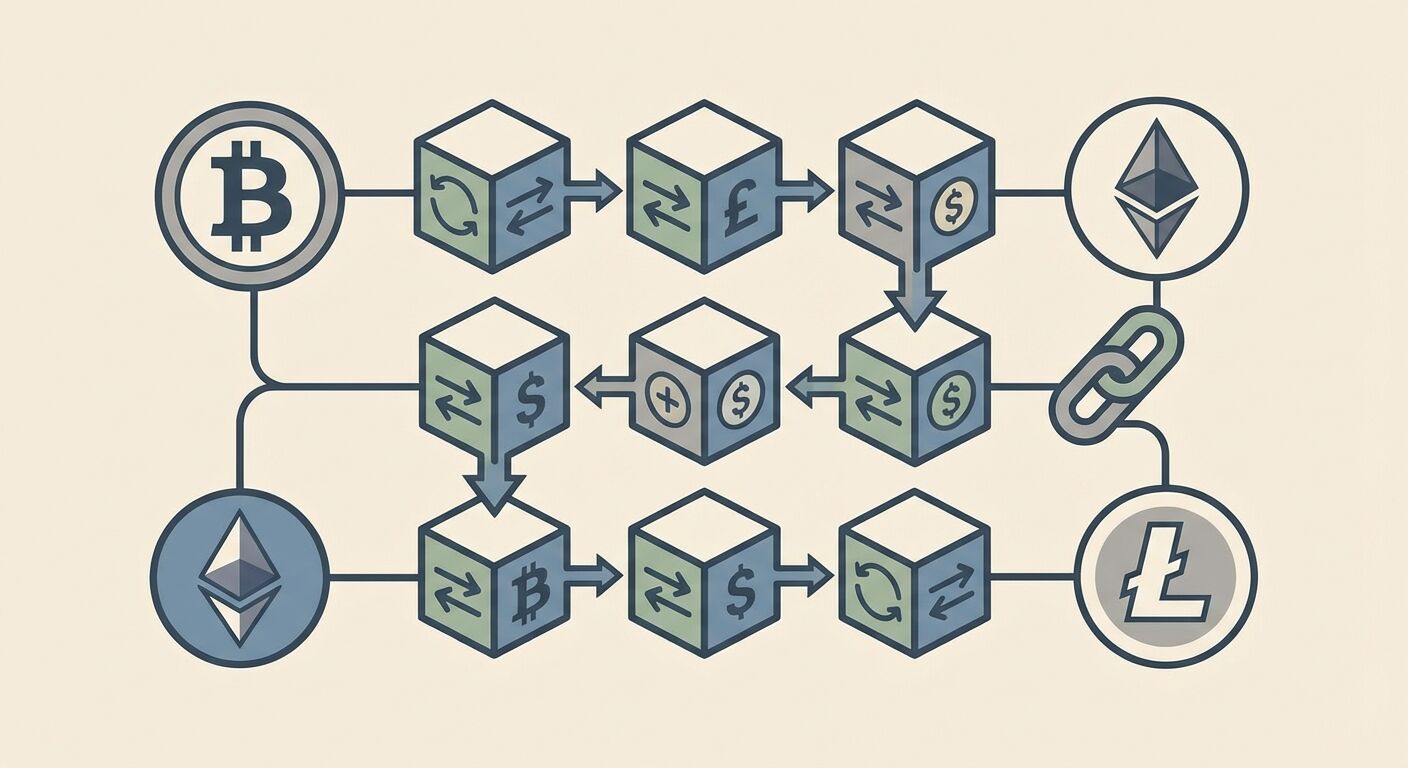
The ten names most often cited by beginners are often the same. Bitcoin, Ethereum, Litecoin, Ripple, Tether, Binance Coin, Solana, US Dollar Coin, Dogecoin and Cardano. Some are full networks, others are stablecoins, and others are very community-oriented projects. This mix shows a simple reality. The word cryptocurrency covers several families of tools.
Bitcoin and altcoins: understand the major differences
Bitcoin is the historical starting point. It was designed as a peer-to-peer digital currency and as a potential store of value, with a predictable issuance policy. When people discover crypto, they often compare everything to Bitcoin. That makes sense. Its network is old, heavily observed, and it often serves as a market barometer. When Bitcoin’s price moves, many other assets follow.
The term altcoins refers to all cryptos other than Bitcoin. And you should not interpret “altcoin” as “worse”. It is rather “another proposal”. Some altcoins aim for faster payments, others for smart contract functionality, others for price stability, others for privacy. This diversity explains why transactions do not look the same from one network to another. Fees, delays, capacity and tools vary.
A classic mistake is to believe that buying what’s trending is enough. In real life, the question is rather: does this network have a clear use? Does the security hold up? Are fees reasonable when the market overheats? And if I need to exit, is liquidity sufficient to convert without leaving too much on the table. Asking these questions already makes you more solid than the majority.
We should also discuss Bitcoin’s symbolic role. Many consider it a form of digital gold. Others see it mainly as an alternative payment system. Whatever the camp, the educational point is the same. This project set a standard. The public blockchain and the idea of a shared ledger paved the way for the rest.
Comparison of popular cryptocurrencies: Ethereum, Litecoin, Ripple and others
Ethereum is often presented as a platform, not just a currency. Its strength comes from smart contracts, programs that execute automatically when conditions are met. This enabled the explosion of DeFi, NFTs and tokenization. The interest for a beginner is to understand that transactions can include actions more complex than a simple transfer. On Ethereum, an operation can be a loan, a decentralized exchange, or an interaction with an application.
Litecoin is an older project, often described as a lighter version for payments. Its history shows a useful point. Networks can exist for a long time without necessarily being “trendy”, because they retain utility and a community. In the crypto market, surviving several cycles is already a signal.
Ripple is associated with interbank payments and cross-border transfers. You often see Ripple in discussions about speed and partnerships. The debate here touches governance and the perceived level of decentralization. It is a good example to understand that not all blockchains share the same philosophy.
Stablecoins like Tether and US Dollar Coin also deserve a word. They aim to track the value of a currency, often the dollar. They serve to navigate the market without immediately going back through the banking system. But they introduce another form of risk. Counterparty risk and reserve management. Security is not limited to technology. It includes trust in the issuer.
Binance Coin, Solana, Dogecoin and Cardano illustrate other dynamics. High-performance platforms, very active communities, or academically oriented projects. The common point is simple. Each network offers a compromise between speed, cost, security and decentralization. It is this compromise that influences transactions on a daily basis and how the market values the asset.
Asset | Dominant role | What beginners should look at |
|---|---|---|
Bitcoin | Store of value and payments | Network robustness, fees depending on congestion, adoption |
Ethereum | Application infrastructure and smart contracts | Variable fees, ecosystem, real usage of dApps |
Ripple | Payments and transfers | Use cases, governance, market liquidity |
Stablecoins | Value stability | Issuer risk, transparency of reserves |
How to buy cryptocurrencies: guide to platforms and payment methods
Buying a cryptocurrency has become simple in appearance. A few clicks, a card, and it’s done. But this is also where many get trapped. Hidden fees, fake platforms, address mistakes, or impulsive purchases when the market overheats. The method I find healthiest is the same as for a budget. Define an amount, understand the product, then execute calmly.
There are two main paths. Brokerage platforms that simplify the experience, and specialized exchanges that offer more options and sometimes more control. In both cases, we are talking about access to transactions on a blockchain, but the intermediary may keep custody of the assets if you don’t withdraw to your own wallet. This nuance is often overlooked at first.
Choosing a reliable platform: security criteria and fees
The first criterion is security. A reputable platform offers strong authentication, login alerts, withdrawal address whitelisting, and strict withdrawal management. It also clearly displays its fees, because fees affect your real purchase price, therefore your breakeven point if the price varies.
The second criterion is transparency on how it works. Are you actually buying the asset, with the possibility to withdraw to a wallet, or are you buying a derivative product? For a long-term investment, this difference is major. In one case, you can exit the system and store yourself. In the other, you depend on the provider and its rules.
The third criterion is real-world costs. A platform may display low fees but make up for it on the spread between buy and sell price. In a fast-moving market, this spread can represent more than a visible commission. I recommend doing a test with a small amount, watching the final ticket, then comparing. It is the most concrete method.
Finally, look at support quality and regulatory compliance. Rules vary by country, but in many places, actors must apply identity checks. This is sometimes annoying, but it reduces certain risks. In a sector where scams target beginners, a platform that plays the compliance card usually inspires more confidence.
Account funding methods to buy crypto: card, bank transfer, etc.
To fund an account, you have several methods. Card, bank transfer, sometimes instant payment, sometimes third-party services. The card is fast but often more expensive, because fees and anti-fraud controls increase costs. The transfer is often cheaper, but it can take more time. Again, it’s a question of compromise between simplicity and cost.
The rule I apply is simple. I choose the method that reduces friction points without exploding fees. For a small learning purchase, the card can be acceptable. For a more regular investment plan, the transfer often becomes more logical. And if the goal is to make frequent transactions, you must anticipate delays and fund availability.
Two precautions to keep in mind. First, check the URL and site authenticity before depositing money. Fake sites copy the interface and steal credentials. Second, avoid leaving large amounts on a platform if you don’t have a clear reason. Storage and security are better managed with a controlled wallet, especially when sums become significant.
There are also indirect investment alternatives. Funds, ETFs depending on jurisdictions, listed products, or shares of companies related to the blockchain. This can suit those who want exposure without managing a wallet and without handling keys. The downside is that you do not participate directly in the network and you depend on the financial product’s rules. For some profiles, it is a good compromise, provided you understand fees and structure.
Method | Advantage | Watch out for |
|---|---|---|
Card | Fast, simple | Higher fees, targeted phishing risk |
Bank transfer | Often cheaper | Possible delays, banking hours |
Instant payment depending on bank | Compromise between speed and cost | Availability varies by country and institution |
Secure storage of cryptocurrencies: understanding digital wallets
If you remember one thing, remember this. In crypto, true ownership is played out on the keys. Not on a verbal promise. The wallet is therefore more than an application. It is the tool that allows you to manage access to your funds and to sign transactions. And as in real life, there are practical solutions for daily use, and more secure solutions for the long term.
I have seen people very cautious with their bank account, then much too lax with their crypto wallet. Weak password, infected computer, forgotten backup. In logistics, losing a delivery slip can already cost a lot. Here, losing your key can cost the whole stock. It seems harsh, but this clarity helps adopt the right reflexes.
Hot wallets vs cold wallets: advantages and disadvantages
A hot wallet is connected to the Internet. It can be a mobile app, desktop software, or an online service. The advantage is obvious. You can send and receive transactions quickly, scan a QR code, and manage multiple assets. For paying a service, testing a DeFi application, or small amounts, it is convenient. But the constant connection increases the attack surface. Security then depends heavily on your device.
A cold wallet is offline, often in the form of a dedicated device. It stores the private key in an isolated environment. Even if your computer is compromised, signing transactions remains protected because it is done on the device. For a long-term investment strategy, it is often more suitable. The purchase cost is the price of peace of mind, provided you manage the recovery phrase backup correctly.
One can also mention a paper wallet. It is a secondary option that involves printing or writing information enabling access restoration. It is simple, but fragile. Moisture, fire, loss, or someone taking a photo is enough to ruin security. If you choose this route, you need storage discipline similar to that for an important notarial document.
The best approach is often hybrid. A hot wallet for small expenses and testing. A cold wallet for savings. Like a physical wallet with cash and, separately, a safe. This separation reduces the risk of losing everything in a single incident.
Best practices to protect private keys and avoid hacking
Security is not a button. It is a routine. And the routine must remain simple, otherwise you won’t keep it. First, enable strong authentication on platforms and on associated email accounts. Many thefts start with a compromised email box, then a password change, then a withdrawal.
Next, back up your recovery phrase correctly. Avoid screenshots and notes in the cloud. Prefer offline storage, in two copies, in two separate locations. It may seem extreme, but it is exactly what we already do for certain important papers. The difference is that here, there is no counter to reissue a duplicate.
Finally, always verify addresses before sending transactions. Some attacks modify the copied address in the clipboard. A good practice is to check the first and last characters, or to use whitelisted addresses. Human errors are more frequent than sophisticated attacks.
Separate your daily use and your long-term storage with two types of wallet
Duplicate the backup of your recovery phrase, offline, in two places
Verify the address and the network before any confirmation of transactions
Block withdrawals to new addresses on platforms if the option exists
As you progress, you will see that discipline reassures. When your rules are set, you are no longer in a panic at each notification. And you can concentrate on the real use of crypto, not on the fear of hacking.
Quick comprehension test on cryptocurrencies
5 questions to check the basics (keys, mining, wallet). No data is sent.
Question 1/5
—
Your result
Score: 0/5 (0 %)
—
Level
—
—
Question-by-question breakdown
Tip: you can navigate with the keyboard (Tab), then select an answer and validate.
Current uses of cryptocurrencies: payments, investments and innovations
When you step away from the charts, you see three main uses. Paying, transferring, and accessing digital services. The first is visible in some merchants and online. The second is important for people who work internationally. The third is more technical, but it is moving fast, notably with smart contracts. In all cases, transactions remain the guiding thread. The more a network is used, the clearer its limits and strengths become.
Let’s return to Leïla. She receives a payment, she converts part into fiat, and she keeps a portion in crypto to test. She notices a key point. Real use is not “buy and wait”. Real use is managing a treasury. With inflows, outflows, conversions, and decisions. Crypto can help, but they require a method.
Fast payments, international transfers and decentralized finance (DeFi)
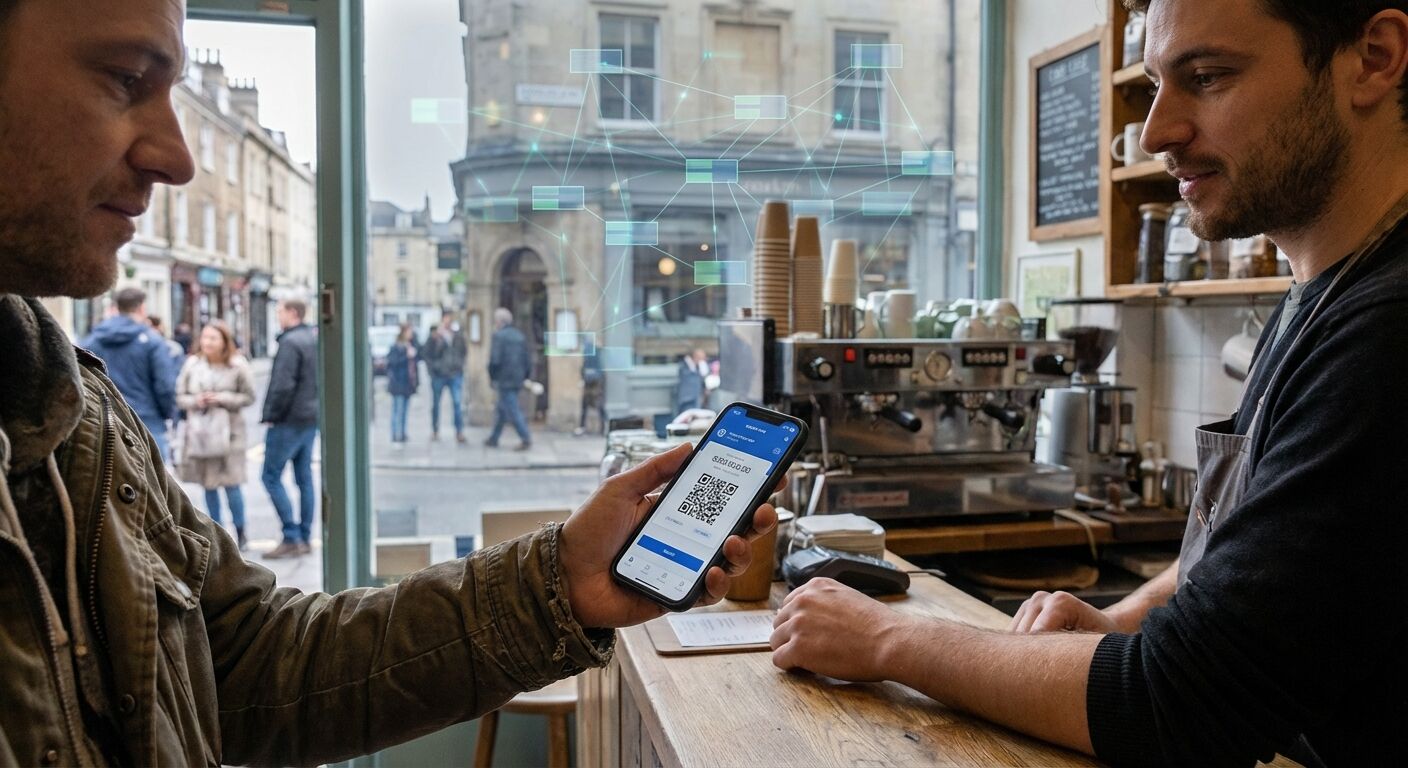
Cryptocurrency payments already exist. We mainly see them online, in some services, and in areas where international payments are complicated. The main interest is settlement speed and the possibility of making transactions without going through multiple banking layers. For someone sending money to family abroad, it can reduce delays and sometimes costs, depending on the chosen network and the state of the market.
International transfers are a strong use case. Sending an amount from one country to another on a weekend without waiting for a service to open can change the game for expatriates or independents. But you must account for conversion fees and price spreads. “Cheaper” is not automatic. It depends on the network, liquidity and local options.
DeFi, decentralized finance, goes further. It offers financial services without a traditional bank, via applications on blockchain. You can lend, borrow, or swap assets via protocols. Transactions there are transparent and automated. The benefit is accessibility. The risk is complexity, bugs, and scams. Here, security is not only about your keys. It also includes the quality of the smart contract.
A healthy reflex is to test with very small amounts, as you would test a new route with a small delivery. Observe fees, delays, and service clarity. Only then decide if it deserves a place in your investment strategy or financial organization.
Smart contracts, tokenization and gradual adoption across sectors
Smart contracts opened a new stage. A contract can automatically execute a condition. For example, release a payment when a delivery is confirmed. In my previous life, we signed slips, validated steps, and handled disputes. Here, part of these rules can be automated by the blockchain. It does not replace everything, but it reduces frictions.
Tokenization is another innovation. You represent an asset as a token. It can be a share of an asset, an access right, or a receivable. For personal finance, the idea is interesting because it can fractionalize certain investments. Fractional real estate, company shares, collectibles. The market is progressing, but regulation follows at different speeds depending on countries. Legal security matters as much as technical security.
Adoption is gradual. Companies are testing traceability, certification, or identity management. Some use a public blockchain, others prefer private networks. For the general public, the impact is mostly visible when the experience becomes invisible. A simple payment, a proof of authenticity, or a fee reduction. Technologies often settle in this way: they become useful before becoming popular.
On the investment side, these uses weigh on perceived value. A network with real applications attracts users, therefore more transactions, therefore more internal economic activity. The market reacts to these signals, sometimes excessively. Keeping a cool head remains the best strategy to avoid buying based only on a well-told story.
Risks and security related to cryptocurrencies: volatility, fraud and regulation
Talking about crypto without addressing risks is selling a dream. The risks are real and varied. They touch prices, technology, regulation, and human behavior. The important point is that you can reduce much of the risk by applying a method. Even if you don’t control the market, you can control your personal rules, your security tools, and your exposure decisions.
I often return to a simple image. Crypto is a fast road, but with turns. You can go far, but you buckle up, respect a speed, and avoid driving tired. In this field, fatigue is called FOMO, the fear of missing out. And that is often where mistakes happen, on a price already stretched.
Extreme volatility and the importance of vigilance for investors
The first risk is volatility. Prices can rise very quickly, then correct brutally. For a beginner, this yo-yo can create the illusion of easy gain, then a shock when the market turns. The right reflex is to define a horizon, an amount, and an exit or rebalancing rule. Without that, you suffer the moves.
The price is influenced by many factors. Adoption, regulatory announcements, hacks, macro cycles, and sometimes pure crowd effects. Bitcoin remains a reference. When Bitcoin accelerates, attention arrives, liquidity follows, and the rest of the market can stir. When Bitcoin calms or falls, the mood changes. This link is not perfect, but it exists often enough to be monitored.
For a reasonable investment, I prefer a progression logic. First understand, then test with little, then increase if the method holds. And above all, diversify. Diversify does not mean buying ten tokens at random. It can also mean limiting the overall share of crypto in your portfolio, and keeping a cash reserve. Freedom comes from maneuvering room, not a bet.
The last point touches psychology. Transactions are instantaneous, apps are fluid, notifications push to act. Sometimes you have to force yourself to slow down. A decision made in thirty seconds can cost months of savings. This simple reminder protects more than many sophisticated tools.
Common scams and essential precautions to know
Scams take advantage of one fact. Many beginners do not yet understand the difference between a platform, a wallet, and an address on the blockchain. Fraudsters exploit this confusion. Fake sites that imitate brands, fake apps, fake advisors, fake customer support. The scenario is often the same. You are urged to act quickly, to “secure” your account, and they retrieve your private key or credentials.
There are also pyramid schemes. Promises of fixed returns, aggressive referral programs, and social pressure. In a real market, nothing is guaranteed. If someone promises regular returns without risk, they are selling you a hidden risk. Romance scams also exist. A relationship is built, then a request for help, then a link to an obscure platform. It is sad, but frequent.
Impersonation of celebrities is a classic. Fake contests, fake giveaways, fake verified profiles. The trap is to get you to send funds with the promise of doubling them. On a blockchain, once transactions are sent, there is no chargeback. This irreversibility is a strength against payment fraud, but a weakness if you send to the wrong place.
Hacking of wallets and devices is another risk. Malware, browser extensions, malicious links, fake QR codes. Here, security is a combination. A healthy device, updates, unique passwords, strong authentication, and separation of uses. If you manage significant amounts, a cold wallet becomes almost inevitable.
Finally, there is regulation. Cryptocurrencies are not guaranteed by a state. They are generally legal in many countries, but with variable frameworks. Tax declarations, anti-money laundering rules, restrictions on certain products. The context can evolve quickly, and it affects the market as much as technology. The right stance is cautious. Get informed locally, avoid dubious platforms, and keep records of your transactions for compliance.
To end with an actionable suggestion, I recommend a basic rule. Never invest an amount whose loss would endanger the household. Then, learn step by step. And keep part of your energy for security, not just for the price. That is what turns curiosity into a sustainable approach.
Do I have to buy Bitcoin to start
No, you are not obliged to. Many start with Bitcoin because it is the most well-known network and a market reference. But the essential thing is to understand the use and the level of security before buying any cryptocurrency.
What is the difference between leaving cryptos on a platform and putting them in a wallet
On a platform, you depend on its rules and its security. In your own wallet, you control the private key and sign transactions yourself. For the long term, many prefer to withdraw to a personal wallet, often cold.
Does mining influence the price
Mining mainly influences security and the issuance of new units on some networks like Bitcoin. The price then depends on supply and demand on the market, adoption and context. Understanding mining helps understand why transaction confirmations and fees vary.
How to avoid the most common scams
Always check the URL, never share your private key or recovery phrase, enable strong authentication, and be wary of guaranteed return promises. If you are pressured to act quickly, it’s often an alert sign. Security starts with calm and verification.
Does Ethereum serve the same purpose as Bitcoin
Not exactly. Bitcoin is mainly known as a digital currency and potential store of value. Ethereum is a platform that also allows smart contracts and applications, therefore more complex transactions. Both rely on a blockchain, but their objectives and uses differ.
Leave a Reply